
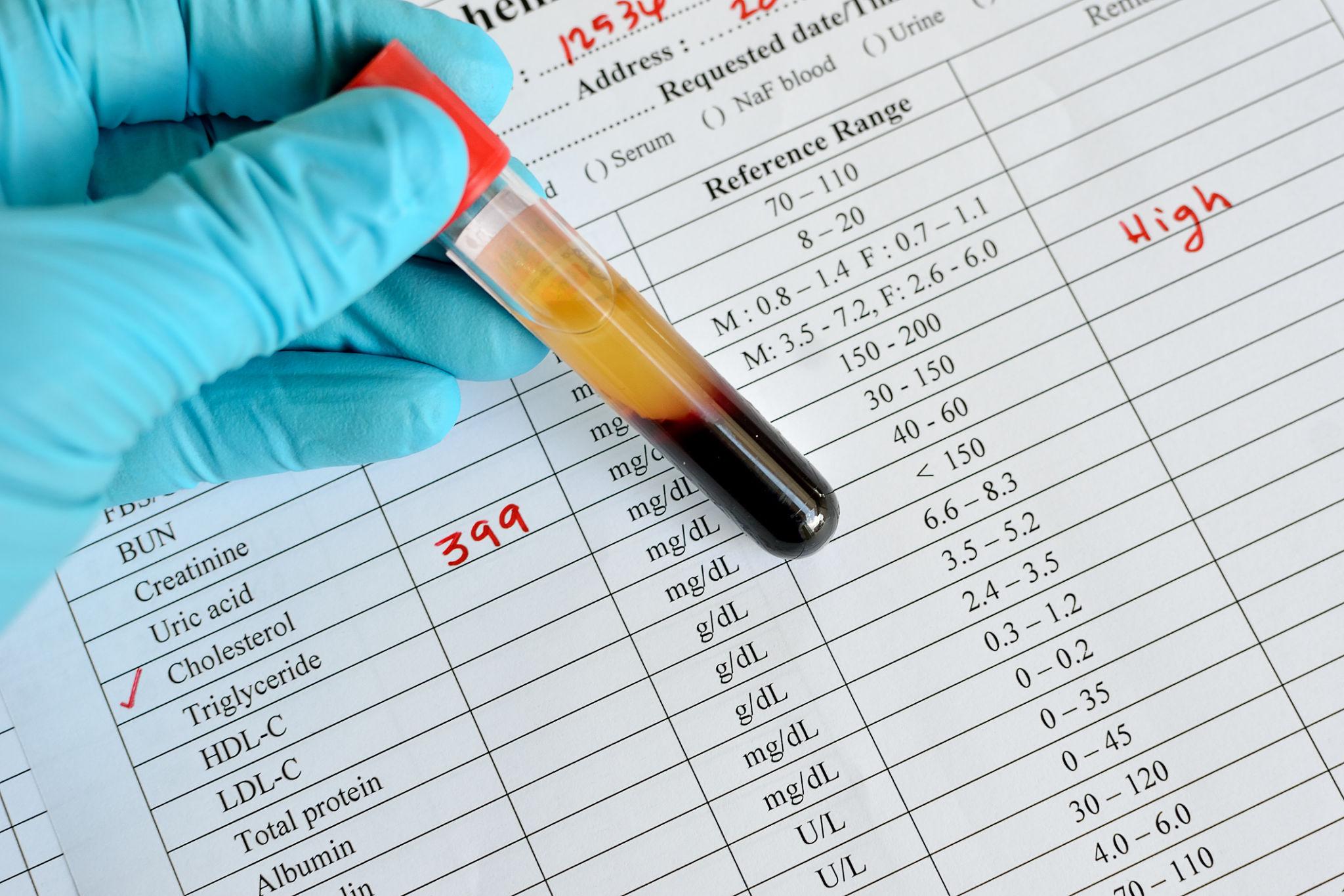
For the past few years, my blood work has been telling me something I already knew: my cholesterol was elevated. I worried about it every time, but I don’t think I truly understood what those numbers meant beyond high cholesterol isn’t good. The conversations with my doctors were usually pretty straightforward. We would keep an eye on it, I should continue working on diet and exercise, and if the numbers continued to rise, eventually we might need to talk about medication. Somewhere along the way, I also started lumping it into the growing list of things that seemed to come with midlife and perimenopause. Hormones change, metabolism changes, things start creaking that didn’t used to creak, and apparently some of your lab numbers start changing too. I wasn’t ignoring my cholesterol. I just didn’t understand that there might be more to the story.
That changed with my most recent blood work. Along with the familiar cholesterol numbers was a test I had never seen before: Apolipoprotein B, or ApoB. I had worked in the medical field and still had never heard of it. Naturally, I started searching, and somewhere between reading the words plaque buildup and heart attack, the concern I had felt about my cholesterol for years turned into something much closer to fear. Suddenly, this wasn’t just another number highlighted on a lab report. I was sitting on my couch wondering what might already be happening inside my arteries.
In very simple terms, ApoB is a protein found on particles that carry cholesterol and other fats through the bloodstream. Because each of the major artery-clogging particles carries one ApoB molecule, measuring ApoB can give doctors another way of estimating how many of those particles are circulating in the blood. That matters because these particles can enter the artery wall and contribute to atherosclerosis over time. The updated 2026 cholesterol guidelines now recognize ApoB testing as useful in certain people when doctors need a clearer picture of cardiovascular risk beyond the standard cholesterol panel.
That was enough information to completely change the way I looked at my previous results. For years, I had focused on whether my total cholesterol and LDL were high. Now I was learning that cardiovascular health can involve more than the numbers most of us recognize from our annual physicals. My first reaction wasn’t empowerment, though. It was panic.
For a day or two, I was genuinely afraid to eat anything without questioning it. Every meal suddenly felt like a decision with much bigger consequences than it had the week before. I would look at something I normally ate and wonder, Is this making things worse? I started reading about saturated fat, soluble fiber, blood sugar, insulin resistance, exercise, supplements and seemingly everything else that might affect cardiovascular and metabolic health. The more information I found, the more overwhelmed I became. There is an enormous difference between learning enough to advocate for yourself and consuming so much information that you become afraid of your own refrigerator. I crossed that line pretty quickly.
The fear also made me ask a different question. Instead of only asking how to lower the numbers on my next blood test, I wanted to know whether there was a way to learn more about what might already be happening inside my body. I messaged my doctor and asked about testing for calcium buildup in my arteries, which led to an upcoming coronary artery calcium scan. A calcium scan doesn’t answer every question about cardiovascular health, but it can sometimes provide additional information about calcified plaque and help clinicians refine cardiovascular risk and treatment decisions.
What I appreciate most about my current healthcare experience is that I was able to ask, What else can we look at? That question has become more important to me than any individual test. My previous doctors weren’t necessarily wrong when they told me my cholesterol was elevated and needed to be monitored. What was missing for me was understanding. I had information, but I didn’t have enough context to know what questions to ask.
That realization also connects to something I’ve been learning throughout my experience with perimenopause. Midlife can bring so many physical changes that it becomes surprisingly easy to place everything into one big bucket labeled getting older. Sometimes hormones are part of the picture. Sometimes they aren’t. Sometimes several things are happening at once. I’m learning that I don’t have to diagnose myself to become more curious about my own health.
Once the initial panic settled, I started looking at what I could realistically change. Not everything at once, and definitely not a perfect “heart-healthy” diet that would leave me scared to enjoy food. I started looking closely at what I already eat, where I could increase soluble fiber, how much saturated fat was showing up in foods I hadn’t thought much about, how my meals affected blood sugar, and where movement and resistance training could fit into my actual life. I’m still figuring this part out, which is why I don’t want to present my personal plan as a prescription for anyone else. What I can share is what I’m learning, what I’m trying, and eventually what my follow-up blood work shows.
If there is one thing I hope another woman takes from my experience, it isn’t that she needs to request the exact same tests I did or follow the same plan I’m building. I hope she becomes curious about her own numbers. If something comes back elevated year after year, ask what it means. Ask what else might be worth looking at. Ask what you can do now rather than only what happens if it gets worse. And if you don’t understand the answer, keep asking until you do.
I wish I had understood my cholesterol better years ago, but I’m not interested in beating myself up over what I didn’t know. I know more now, and I’m learning that advocating for my health doesn’t mean questioning every medical recommendation or trying to become my own doctor. It means becoming an informed participant in the conversation.
This is only the beginning of that conversation for me. I’m still waiting for my calcium scan. I’m still learning about ApoB. I’m still figuring out what a heart-healthy way of eating looks like when it has to coexist with real life, a sensitive stomach, family meals, cravings, budgets, and everything else that doesn’t fit neatly into a nutrition textbook.
But I am no longer afraid to eat.
And I am no longer satisfied with simply knowing that a number is high.
I want to understand what it means.
Leave a Reply